Session 1· ·growth
Economy in the Long Run
Growth fundamentals — the leisure-work trade-off, the island economy, and why consumption doesn't create long-run growth.
- #growth
- #long-run
- #island-economy
- #deadweight-loss
- #capital-formation
Session 1 · Economy in the Long Run
LockedSign in with your ISB email to watch this recording.
Session one, and he starts with a warning, not a formula: almost everything you believe about growth — that consumption drives it, that events create it, that government spending buys it — is going to fail an audit in the next hour. The tools are simple (an island, five workers, ten kilos of rice), but every later session stands on what the island proves. Take this one slowly; the course builds.
Course Structure
Course Overview
This macroeconomics course is organized into 15 sessions, each approximately one hour long, held on weekends. The course is structured in two main phases:
Phase 1: Closed Economy Macroeconomics
Phase 2: Open Economy and Trade
Textbooks and References
Primary: Mankiw’s Macroeconomic Principles
Supplementary: Prof will provide readings for each session
Recommended Supplementary Books
The Enlightened Economy by Joel Mokyr - Historical context on economic growth
The New Geography of Jobs by Enrico Moretti - Regional economic development
Real-World Motivations and Examples
He refuses to start with theory. Three puzzles from real places first — each one is a question the course will eventually let you answer, and none of them can be waved away with a headline.
Example 1: Micro-lending in Hyderabad
Street vendors earn 30-40% monthly marginal returns, yet capital does not flow freely to these entrepreneurs. Why doesn’t capital flow to high-return opportunities?
Example 2: Darjeeling vs. Hyderabad - Regional Wage Disparity
Highly-skilled taxi drivers in Darjeeling earn 7,700 rupees/month, while unskilled Hyderabad drivers earn 25,000-40,000 rupees/month. What causes sustained regional growth gaps?
Example 3: Bangalore vs. Hyderabad - FDI and Entry Barriers
Despite superior infrastructure, Hyderabad’s FDI advantage over Bangalore is declining. Hyderabad’s economy is controlled by few families with high entry barriers and rent-seeking.
Historical Growth Context and Modern Exceptionalism
Pre-Industrial Growth Patterns
Modern economic growth is not normal. Economic stagnation was the historical norm.
Pre-Industrial Growth Rate
Annual growth: 0.2% to 0.4%
Duration: 500+ years (1250-1750)
Living standards barely improved across centuries
Modern Growth Episodes
Post-WWII Germany and Japan: Rapid reconstruction
Asian Tigers: Double-digit sustained growth
China: 10% annual growth for 20+ years
Common Misconceptions About Growth
Misconception 1: Consumption Creates Long-Run Growth
Correct: Consumption is a consequence of income, not a driver of growth. Growth comes from increased productive capacity.
Misconception 2: Events Create Growth
Correct: Events shift spending in time but don’t create new productive capacity.
The example that we took of a person choosing to travel to Ahmedabad because of the stadium or a new airport is consumption transfer, not growth.
Misconception 3: Government Spending Creates Growth
Correct: Government transfers redistribute but don’t create productive capacity. Spending may reduce growth through crowding-out.
The Leisure-Work Trade-off: Foundation of Growth
Core Principle
Universal Economic Truth: Growth depends on INCREASED LABOR SUPPLY, not consumption.
Fundamental Framework: Agents trade leisure for work. Growth occurs when the relative value of work increases because new desirable goods/services become available.
Why Would People Work More?
The goods/services available become more desirable
Work becomes more productive
Wages rise relative to leisure preferences
Critical Corollary: Consumption Follows Income
The causal chain: Increased Work Supply → Higher Income → Increased Consumption
The Island Economy Model
Model Setup
Island Economy Setup
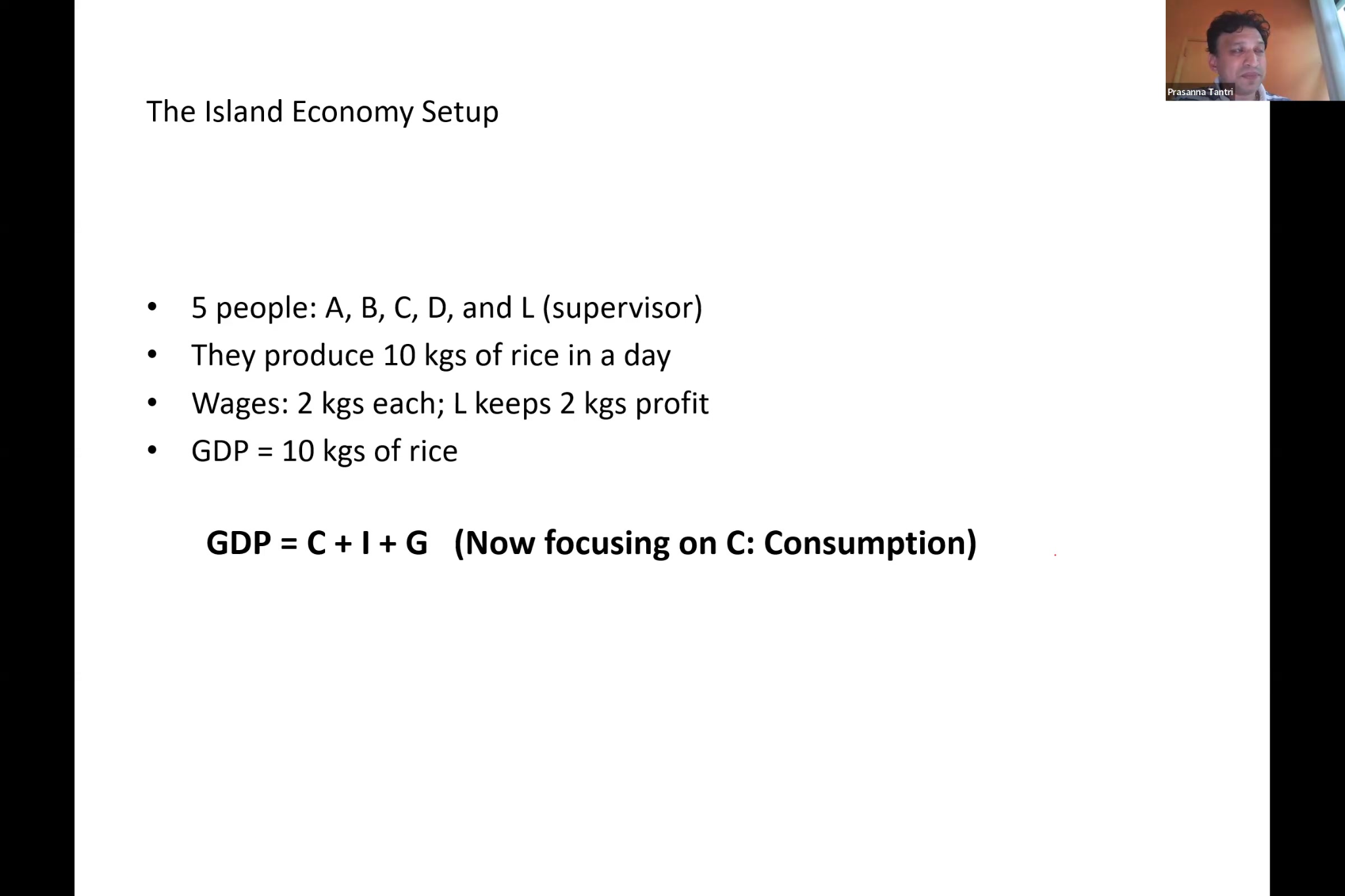
Island Economy Parameters
Workforce: 5 workers (A, B, C, D) + 1 supervisor (L)
Production: 10 kg of rice per day
Wage: 2 kg rice per worker
Profit: Supervisor retains 2 kg as profit
GDP: 10 kg rice
Scenario 1: Government Expenditure and Deadweight Loss
Setup and Effects
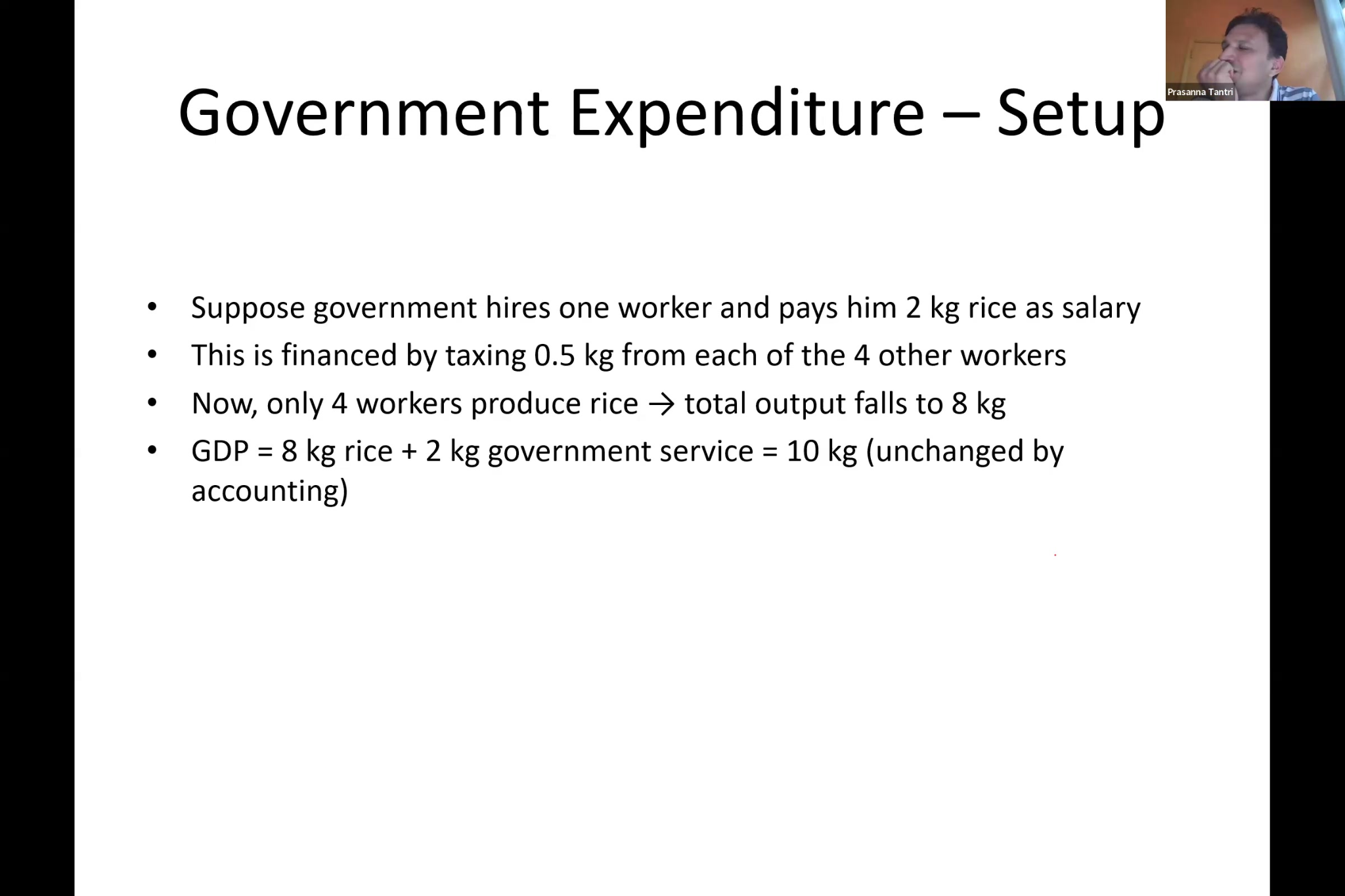
The government imposes a 2 kg rice tax and hires 1 worker as a police officer.
Initial Changes
Private Workers: 4 (from 5)
Private Output: 8 kg (from 10 kg)
Government Service: 2 kg
GDP (accounting): 8 + 2 = 10 kg (unchanged)
The Problem: Incentive Distortion
Workers reduce labor supply because purchasing power falls through taxation. Output falls further to 7.5 kg private + 2 kg government = 9.5 kg total GDP.
Deadweight Loss
Loss: 0.5 kg (economic waste from the policy)
Government is justified only when services increase productivity enough to offset deadweight loss.
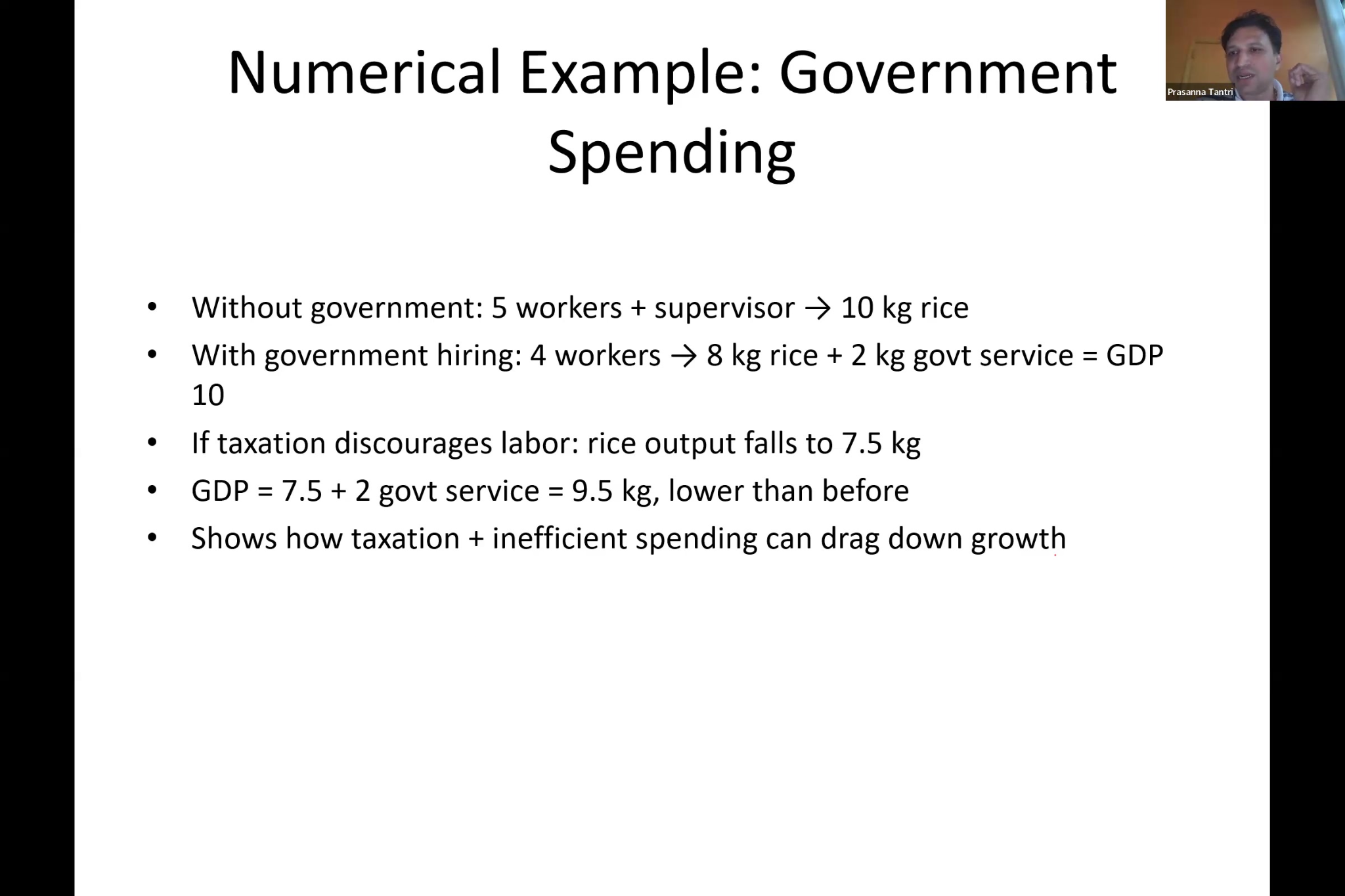
Note what just happened: measured GDP barely moved, but half a kilo of rice simply vanished from the island. That gap between what the accounts say and what people actually eat is the whole point of the scenario — and it’s why “government spending creates growth” fails the audit above.
Scenario 2: Investment and Capital Formation
Setup: Building a Productive Asset
The economy builds a pond that increases future rice productivity. This requires diverting resources from current consumption.
Investment Requirements
2 workers + 50% supervisor time
Current output: Only 5 kg rice
Wage bill: 10 kg
The Financing Problem: Origin of Finance
Workers must be paid 10 kg, but only 5 kg is available. Solution: Workers accept IOUs (bonds). This is the origin of finance - enabling investment through promises of future returns.
The Savings Decision
Workers sacrifice 1 kg current rice for 1 kg of future rice. Investment is viable only if the pond increases future production enough to justify the sacrifice.
Real Interest Rate: The Return to Capital
The real interest rate is the expected percentage return on investment. If the pond increases future rice by 20%, the real interest rate is 20%. Workers demand this rate as compensation for sacrificing current consumption.
Economy in the Long Run
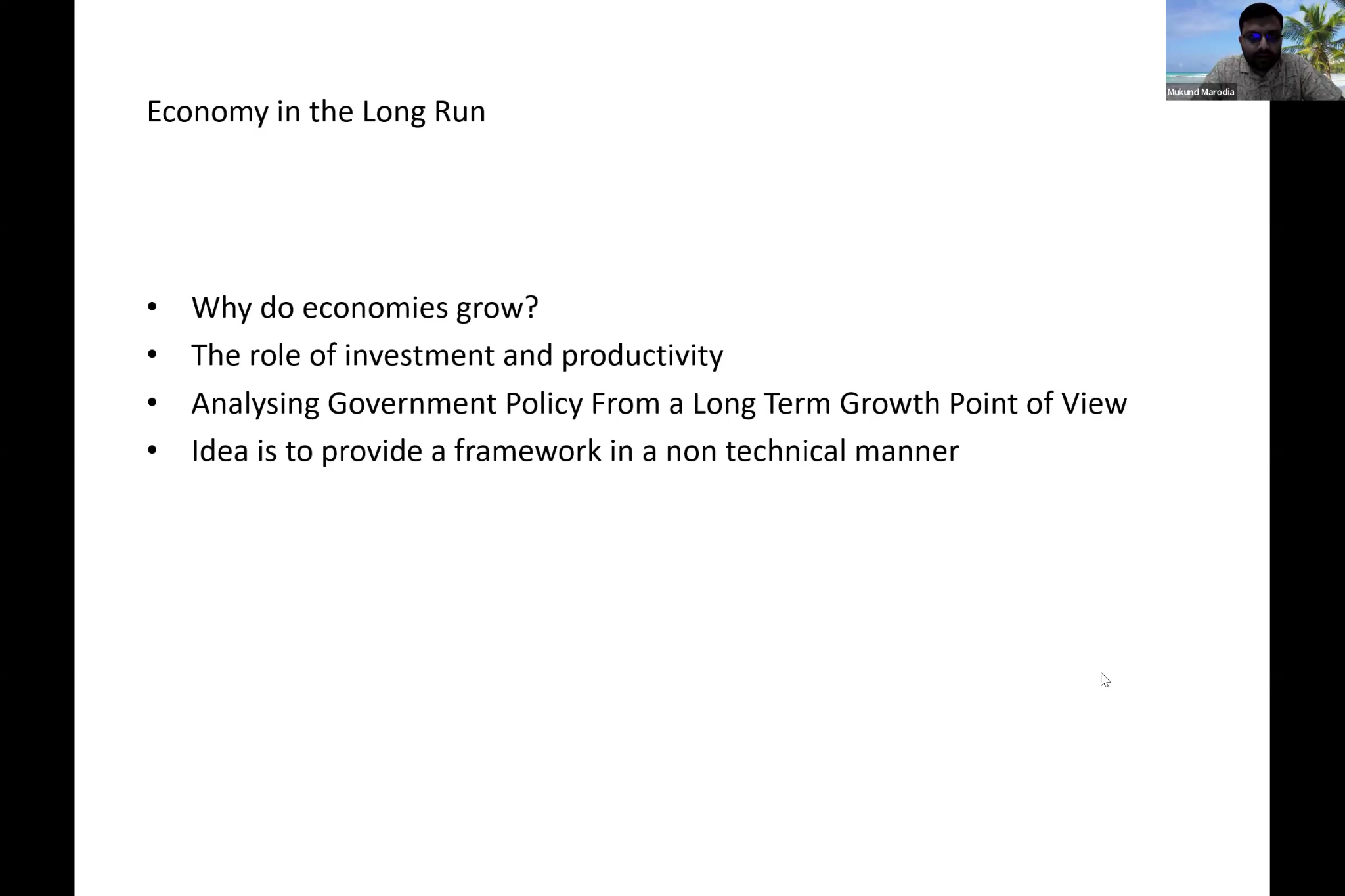
Key Takeaways and Conclusions
Growth Requires Increased Labor or Capital Productivity, Not Spending
GDP = C + I + G is an Accounting Identity, Not Causal
Government Spending Has Deadweight Costs
Investment Requires Savings
Real Interest Rates Reflect Capital Productivity
Modern Growth Is Exceptional
What You Can Now Do
The next time someone tells you a cricket stadium, a wedding season, or a new airport will “boost the economy,” you can ask the island question: did anyone on the island work more, or did rice just move between plates? And when a budget speech promises growth through spending, look for the half kilo that goes missing — the deadweight the accounts never show. Watch one number with new eyes this week: the real interest rate. It is not a policy lever; it is the island’s pond telling you what capital actually earns.
Looking Forward
These foundational principles will guide all subsequent analysis of macroeconomic phenomena. The next sessions will explore how these principles manifest in closed-economy macroeconomics (Phase 1) and eventually open-economy settings with international trade (Phase 2). Continue to Session 2 — The Keynesian Cross, where the clock shortens and prices stop moving.