Session 5· ·fiscal policy
Fiscal Policy, Crowding Out & Transmission
GST cuts, the crowding-out debate, the five-step transmission mechanism, and the AI-human-capital question for India.
- #fiscal-policy
- #crowding-out
- #transmission
- #gst
- #human-capital
- #india
Session 5 · Fiscal Policy, Crowding Out & Transmission
LockedSign in with your ISB email to watch this recording.
Fiscal policy gets its full hearing: the GST tax-cut case worked end-to-end, crowding out in both its textbook form and its modern RBI-accommodates form, and a five-step transmission chain you can test against data instead of asserting at dinner. The session ends somewhere unexpected — AI, human capital, and what India’s constraint actually is.
GST Tax Cut Analysis
Professor Prasanna Tantri begins by analyzing recent GST rate cuts in India and their limited macroeconomic impact:
-
GST collection growth only 4% one month after cut (far below 10% budget target)
-
When government cuts spending to offset lower tax revenue, aggregate demand may fall
-
Only stimulative if government keeps deficits high AND RBI accommodates through Variable Rate Repos
-
Scope limited: GST cuts apply to goods (45% of economy); services (55%) and agriculture (16-17%) untouched
Whoever would have benefited from government expenditure will not now spend, and their people who earn from them will also not spend.
The Three Essential Tools of Short-Term Macro
The ‘whole endgame of short-term macro’ requires bringing together three essential tools:
-
Keynesian Cross - demand/output equilibrium
-
IS curve - investment-savings relationship
-
LM/MP curve - money market and monetary policy
Core Framework Equation
Y = C0 + C1(Y - T) + I(Y, R) + G
Investment I is now a function of both income (Y) and real interest rate (R).
Restated Assumptions
-
Prices are rigid (sticky) in the short run
-
Inflation expectations constant
-
Closed economy (no international trade)
Fiscal and Monetary Policy Interaction
intricate interaction between fiscal and monetary authorities:
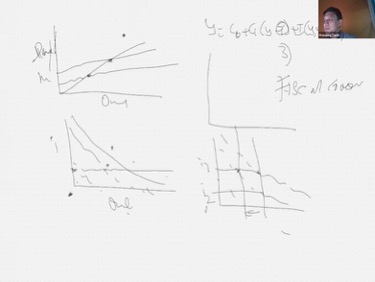
Fiscal and monetary policy interaction quadrants
When Central Bank Accommodates
-
Central bank commits to maintaining interest rates and increases money supply as needed
-
Fiscal expansion has maximum stimulative effect
-
No crowding out of private investment
-
Output rises at same interest rate
When Central Bank Doesn’t Accommodate
-
Central bank holds money supply constant
-
Government borrowing raises interest rates
-
Crowding out reduces private investment
-
Fiscal multiplier is smaller
Government Borrowing and Crowding Out
Traditional Crowding Out: When government borrows, money demand rises and interest rates increase, reducing private investment
Modern Reality: RBI Accommodates
-
RBI is committed to interest rate targets
-
Maintains constant rate by pumping money into the system
-
Result: Both higher income AND same interest rate
Five-Step Tax Cut Transmission Mechanism
-
Direct Consumption Effect: Tax cut increases disposable income, leading to higher consumption and aggregate demand
-
Multiplier Effect: Expenditure increases income, which increases further demand, shifting demand curve rightward
-
Money Market Response: Higher income increases money demand. RBI maintains rate at target and increases money supply.
-
IS Curve Shift: For same interest rate, new equilibrium is at higher income level
-
No Crowding Out: RBI’s commitment to interest rate target prevents traditional crowding out
This is what Keynes discovered in the short run. Fiscal policy is very powerful when the central bank accommodates and inflation expectations remain constant.
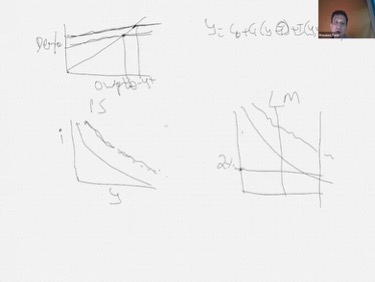
Complete demand/output diagram with IS and LM curves
Professor Tantri provides analysis of India’s recent economic trajectory:
-
India slipped to 4th position among emerging markets (from 2nd)
-
Reverse AI story: AI benefits flowing to other countries, not India
-
IT company valuations falling while Korea’s rising
-
10-20 year underperformance versus S&P 500
Root Causes
-
Education quality issues
-
Lack of innovation
-
Structural challenges in human capital
Growth eventually is innovation. There is nothing else.
The professor expresses cautious optimism about labor law reforms as potential structural improvements.
AI, Human Capital, and India’s Future
India’s cognitive capital advantage is eroding with AI outsourcing:
-
China learned to manufacture; India copied IT without scaling to frontend
-
AI reduces gap between good and bad workers when asked to compute the easy tasks while it INCREASES the gap when asked to perform complex tasks
-
Without high-level talent, India will struggle in AI economy
-
The political system remains focused on quarterly growth while ignoring structural issues.
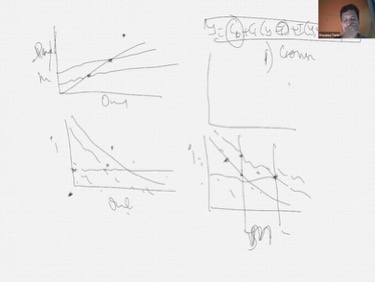
Figure 4: Comprehensive diagram with complete annotations
Takeaways
• The IS-LM/MP framework is the foundational tool of short-term macroeconomics
• Investment depends on both income and real interest rates
• Modern monetary systems with central bank accommodation make fiscal policy powerful
• Government borrowing doesn’t raise rates when central bank accommodates
• GST cuts without maintaining spending are not stimulative
• India’s structural challenges matter more than quarterly GDP numbers
• AI widens gap on complex tasks: India needs world-class human capital
Supplementary Notes (From Student’s Handwritten Notes)
From Keynesian Cross to IS-LM
• The concept of AD (Aggregate Demand) — take the example of economists predicting recession
• Recession is output falling for 2 consecutive quarters
• The equilibrium condition: AD = Output, or Z = Y
• The slope of Aggregate Demand is C1 (MPC, where C1 < 1) — also called the fiscal multiplier
• This is where the IS curve comes into the picture — there’s an alternate way of understanding the goods market through the IS curve
• Goods Market + Financial Markets: All learnings combined with Caballero’s framework
• Investment I = Is + Īg: investment has both a sensitive component (to interest rate) and an autonomous component
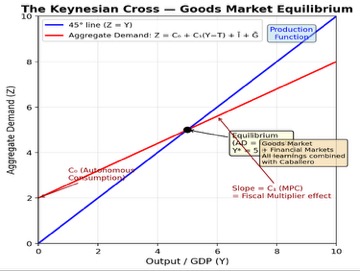
Figure 5: From Keynesian Cross to IS-LM Framework (Recreated from handwritten notes)
Government Deficit & Crowding Out
• S(Y) = I — the savings-investment identity
• If government maintains deficit, it’ll crowd out private investment — also raises interest rates
• Can private sector now invest more? Depends on prevailing interest rates
• What are the penalties: If people are spending among firms, firms can reinvest into growth
• If the government doesn’t maintain deficit → GDP falls
• Raising deficit → raises inflation → risk of inflation expectations spiraling
• The trickle-down assumption: lower rates → more private investment. But need to examine if this actually holds
• Reference: This happened in Sri Lanka — introduced tax cuts etc. to stimulate growth but ended in crisis
Role of Consumption & Labour in Production Scenarios
• If consumption rises, firms may increase labour supply and grow, accumulate by goods and services on that path
• The role of goods and services on economy — how it has an effect, and when it is true
• Key point: no (zero) project without labour — production requires labour input
• But if most can’t get a job with more fulfilled/easier access — implications for women in labour market
• Supply of labour, domestic labour & wealth in economy — output depends on these factors
What You Can Now Do
At the next GST or income-tax cut, walk the five steps and mark where the chain can break — that is where the empirics will show up first. If G-sec yields climb while the RBI holds, you are watching crowding out happen live; no anchor will say the words, but you will see it in the curve.
Continue to Session 6 — Real Exchange Rates & Productivity, where the course steps out to the medium term.